
Navigating HIV and Human Rights: Challenges in Philippine Legal Advocacy Today
Rights, Barriers, and Remedies: The State of HIV Legal Advocacy in the Philippines
The fight against the HIV epidemic in the Philippines extends far beyond medical clinics; it is fought daily within the nation’s legal arenas. Safeguarding the human rights issues of individuals affected by the disease remains critical to public health. This investigative article examines the critical landscape of institutional protection, analyzing the core components, systemic hurdles, and remedial strategies defining modern advocacy.
In this article, readers will examine the following:
- Core pillars of legal advocacy within the Philippine archipelago.
- Systemic bottlenecks and socio-political challenges impeding progress.
- Strategic interventions required to bridge policy gaps and protect human rights.
Part I: The Structural Blueprint of Philippine HIV Legal Advocacy
The scale of the modern epidemic necessitates a robust legal infrastructure. Legal advocacy serves as a critical mechanism to defend human rights issues and preserve the dignity of people living with HIV (PLHIV). Within the national framework, advocacy initiatives primarily converge on six statutory and systemic pillars.
1. Statutory Safeguards and Anti-Discrimination Measures
The legislative bedrock of national advocacy is Republic Act No. 11166, formally known as the Philippine HIV and AIDS Policy Act of 2018. Designed to institutionalize a human rights-based approach, this law explicitly criminalizes stigma-driven actions. The statute mandates total non-discrimination across corporate, academic, and civic institutions. It strictly prohibits unjust employment terminations, academic expulsions, and the denial of medical care based on an individual’s health status.
2. Institutional Enforcement of Confidentiality
Preserving privacy is critical to encouraging public testing and treatment. The Philippine HIV and AIDS Policy Act enforces strict data protection rules. It bans the unauthorized disclosure of a patient’s medical status. The law requires healthcare facilities and corporate employers to maintain secure medical record protocols. This ensures data is only shared with explicit, informed legal consent.
3. Subsidized Access to Life-Saving Healthcare
The state legal framework guarantees universal access to comprehensive prevention and clinical management systems. Through joint efforts by the Department of Health (DOH) and the Philippine Health Insurance Corporation (PhilHealth), the state provides subsidized or completely free Antiretroviral Therapy (ART). This turns healthcare from a financial privilege into an enforceable legal right.
4. Mobilization of Civil Society Organizations
Non-governmental actors and Civil Society Organizations (CSOs) serve as essential frontline defense mechanisms. These groups bridge gaps in state capacity by delivering community-level education, direct healthcare navigation, and grassroots legal aid. By participating in national policy debates, CSOs amplify the lived experiences of people living with HIV within government agencies.
5. Mandated Public Education and Awareness Campaigns
To combat deep-seated social stigma, the law requires educational institutions to integrate HIV and AIDS awareness into regular school curricula. This structural approach is supported by national media campaigns and local community outreach. Together, they counter misinformation with evidence-based medical facts.
6. Pro Bono Legal Infrastructure
When statutory rights are violated, specialized legal groups provide essential protection. Organizations like ACHIEVE, IDEALS, the Legal Network for Truthful Aid (LENTE), and the Free Legal Assistance Group (FLAG) offer pro bono representation for PLHIV facing discrimination. These entities run ongoing training programs for lawyers and paralegals to build a highly skilled legal network across the country.
Part II: Systemic Bottlenecks: The Challenges of HIV Legal Advocacy
Despite these comprehensive laws, major gaps remain between legislative intent and daily reality. A look at the importance and challenges of Philippines legal advocacy in the context of PLHIV reveals several systemic barriers that weaken statutory protections.
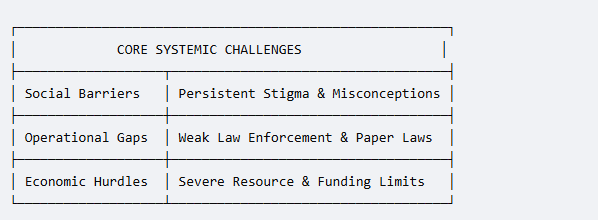
- Pervasive Social Stigma: Deep-rooted cultural misconceptions continue to fuel social exclusion. Fear of public shame frequently discourages vulnerable individuals from seeking early testing or life-saving treatment.
- Inconsistent Law Enforcement: Institutional enforcement of RA 11166 remains weak. Violations of privacy and clear acts of workplace discrimination often go unpunished due to complex bureaucratic systems.
- Severe Resource Scarcity: Both state agencies and NGOs operate under tight budget constraints. This limits the reach of advocacy programs and leaves rural healthcare centers without adequate facilities or steady supplies of ART.
- Socioeconomic and Gender Disparities: Poverty significantly worsens health challenges. Low-income individuals and marginalized women face overlapping discrimination, making it harder for them to access high-cost legal services or specialized medical centers.
- Shifting Political Priorities: Frequent changes in local and national leadership disrupt long-term HIV programs. A lack of smooth coordination between government agencies often results in fragmented, inefficient public health campaigns.
- Digital Privacy Vulnerabilities: As healthcare systems transition to electronic medical records, new data security risks emerge. Inadequate digital defenses leave sensitive patient information vulnerable to breaches, threatening patient safety.
Part III: Strategic Solutions: Overcoming the Crisis
To address the importance and challenges of the Philippines legal advocacy in the context of PLHIV, the country must move from simply passing laws to actively enforcing them. Protecting human rights issues requires a coordinated, multi-layered approach.
1. Dismantling Stigma Through Targeted Public Education
- Evidence-Based Campaigns: Launch long-term, high-impact public media campaigns designed to replace fear with scientific facts regarding HIV transmission and management.
- Institutional Sensitization: Implement mandatory human rights and diversity training modules for corporate executives, school administrators, and healthcare professionals nationwide.
- Community-Led Dialogues: Partner with local leaders and faith-based organizations to challenge cultural biases and foster a supportive environment for affected individuals.
2. Strengthening Statutory Enforcement and Accountability
- Localized Oversight Committees: Establish dedicated oversight bodies within Local Government Units (LGUs) to monitor compliance with the Philippine HIV and AIDS Policy Act.
- Streamlined Reporting Mechanisms: Create secure, anonymous digital platforms where individuals can report discrimination or privacy breaches directly to human rights advocates.
- Judicial and Law Enforcement Training: Conduct specialized legal clinics for judges, prosecutors, and police officers to ensure swift prosecution of statutory violations.
3. Securing Sustainable Financing and Resource Allocation
- Expanded PhilHealth Subsidies: Broaden public insurance packages to cover ancillary costs, including viral load testing, mental health support, and opportunistic infection treatments.
- Public-Private Partnerships: Cultivate strategic alliances with corporate foundations to secure corporate social responsibility (CSR) funding for grassroots advocacy.
- Decentralized Distribution Networks: Allocate dedicated state funds to establish satellite clinics and community-led hubs in remote provinces, ensuring uninterrupted access to ART.
4. Enhancing Data Protection and Digital Security
- Encrypted Health Records: Mandate that all public and private health facilities upgrade to end-to-end encrypted electronic medical record (EMR) systems.
- Rigorous Privacy Audits: Conduct routine cybersecurity assessments across health databases to prevent unauthorized leaks and data breaches.
- Strict Penal Institutions: Impose severe administrative and financial penalties on any institution or individual found guilty of violating patient confidentiality.
Conclusion
The true measure of the Philippine HIV and AIDS Policy Act lies not in its written words, but in its daily execution. Fulfilling the true potential of the Philippines legal advocacy in the context of PLHIV requires a united front. By matching progressive legislation with strict law enforcement, sustainable funding, and aggressive anti-stigma campaigns, the Philippines can transition from a state of legal promise to one of absolute human rights protection. Only when the law functions as an unbreakable shield can people living with HIV live with the dignity, security, and equality they are justly owed.


